PosterCutter Blog
Global Handwashing Day 2026: 12 Low-Prep Classroom Activities for Elementary Students
Global Handwashing Day is October 15. Use these 12 practical classroom activities to help elementary students understand when and how to wash their hands, why soap matters, how germs spread, and how to turn healthy routines into memorable learning without relying on worksheets alone.
Global Handwashing Day takes place every year on October 15, and it is one of those classroom dates that works because the topic is immediately practical.
Students do not have to imagine an abstract concept. They wash their hands every day. They touch classroom supplies, eat snacks, use shared materials, cough, sneeze, play outside, and move between different spaces.
The Global Handwashing Partnership uses the multi-year theme “Be a Handwashing Hero!”, which gives teachers a useful way to frame the day: handwashing is not simply a rule adults repeat. It is a routine students can understand, practice, and help normalize in their classroom.
The strongest lesson does not need to be complicated. A short demonstration, a sequencing task, one discussion, and a visual reminder can be more useful than a packet of nearly identical worksheets.
Here are 12 low-prep activities you can use with elementary students for Global Handwashing Day 2026.
1. Start With “When Should We Wash?”
Before teaching the steps, ask students when handwashing is actually needed.
Write common classroom situations on cards:
before eating lunch;
after using the toilet;
after coughing or sneezing into your hands;
after outdoor play;
after touching something visibly dirty;
after handling classroom pets or animals;
before helping prepare food;
after taking out rubbish.
Ask students to sort the cards into Wash Now, Probably Not Yet, and Let’s Discuss.
The discussion is more important than the sorting itself. The CDC identifies several key moments for handwashing, including before eating, after using the toilet, after coughing or sneezing, after touching animals, and after handling garbage.
For younger students, replace text cards with simple pictures.
2. Teach the Handwashing Sequence With Picture Cards
Many children know they should wash their hands but rush through the process.
Give students five picture cards:
Wet hands with clean running water.
Add soap and lather.
Scrub all areas of the hands.
Rinse well.
Dry hands.
Mix the cards and ask students to put them in the correct order.
For grades 2–4, add extra cards showing areas that are easy to miss:
backs of hands;
between fingers;
thumbs;
fingertips;
around the nails.
The CDC recommends scrubbing with soap for at least 20 seconds, which makes the activity easy to connect with time, counting, and classroom routines.
3. Run a 20-Second Classroom Timing Challenge
Students often think 20 seconds is much shorter than it actually is.
Do not start with water. Practice the timing at desks first.
Ask students to rub their hands together as if they were washing them. Start a timer and ask them to stop when they believe 20 seconds has passed.
Then compare their estimates with the actual timer.
Repeat the activity and see whether estimates improve.
This becomes a quick cross-curricular lesson involving:
time;
estimation;
counting;
health;
self-management.
For younger students, create a classroom 20-second chant instead of relying on a copyrighted song.
4. Make a “Germs Travel” Demonstration
A common handwashing activity uses glitter to represent how easily material transfers from one person or object to another.
Use this carefully and keep the point simple: things on our hands can move to other surfaces.
Place a very small amount of washable glitter on one student's hand, then have the student touch a few designated classroom objects or shake hands with a volunteer.
Ask students to observe where the glitter appears.
Then discuss:
Why did it spread?
Which objects were touched?
Would we always be able to see germs this easily?
What routines can reduce unwanted spread?
Make it clear that glitter is only a model. Germs are not literally glitter, and the activity is meant to show transfer rather than perfectly represent microbiology.
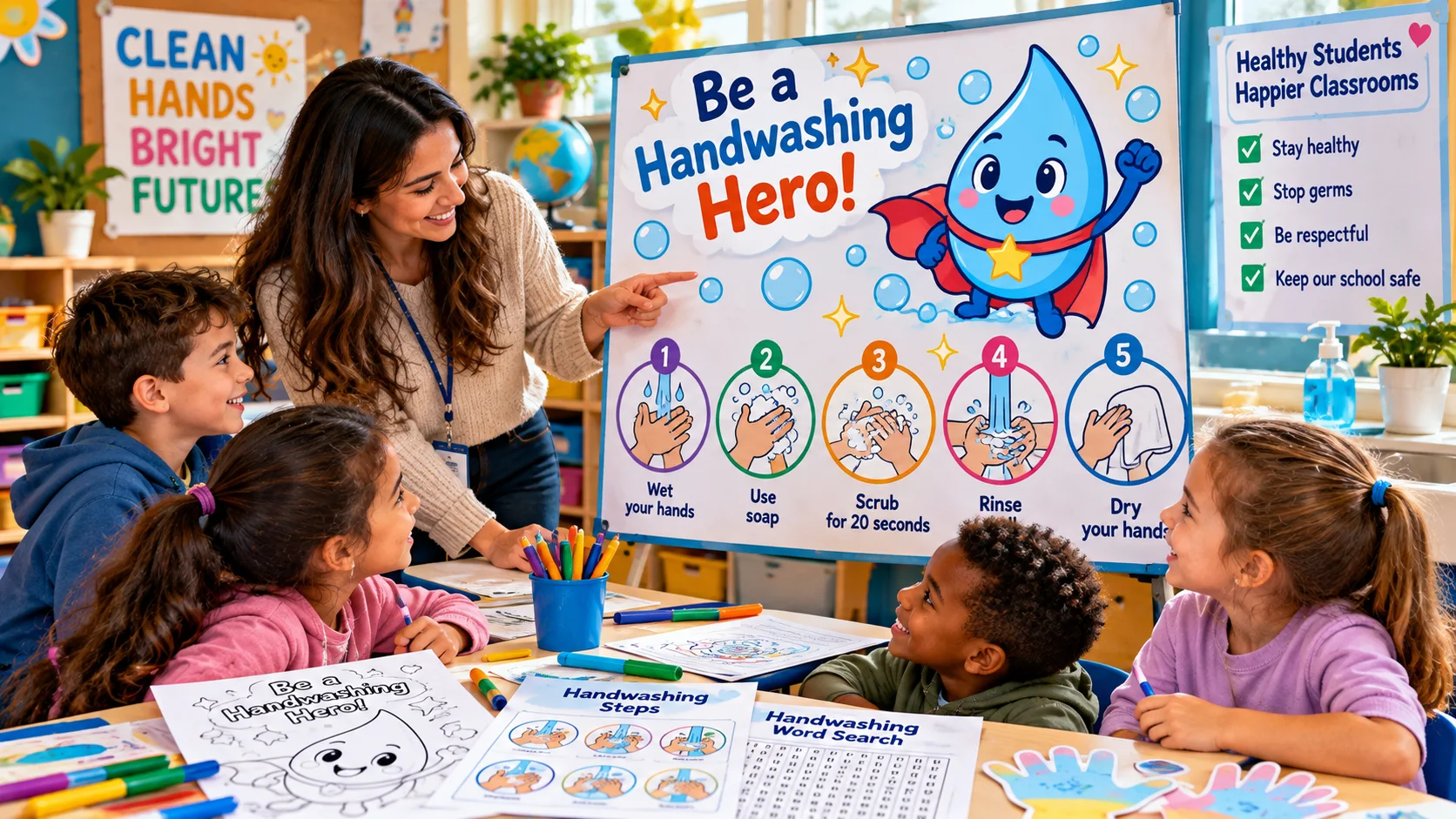
5. Create a Collaborative “Handwashing Hero” Poster
The official Global Handwashing Day theme gives teachers an easy classroom-display idea.
Create one large black-and-white poster with the heading:
Be a Handwashing Hero!
Surround the title with five illustrated handwashing steps and smaller spaces for student messages.
Each student colors or completes one section. Once the pieces are finished, assemble them into one large wall display near the classroom sink or door.
If you already have a finished poster design, the PosterCutter Printable Poster Maker can split it into regular Letter or A-series pages so a normal classroom printer can produce the larger display.
Add a short written response under the poster:
“One time I should remember to wash my hands is…”
That keeps the display tied to actual learning rather than decoration alone.
6. Use a Handwashing Vocabulary Word Search as a Warm-Up
A word search is useful when it introduces vocabulary that students will actually use later in the lesson.
Possible words include:
soap;
water;
scrub;
rinse;
dry;
clean;
germs;
fingers;
thumbs;
health;
hygiene;
routine.
After students find the words, ask them to choose three and explain how each relates to handwashing.
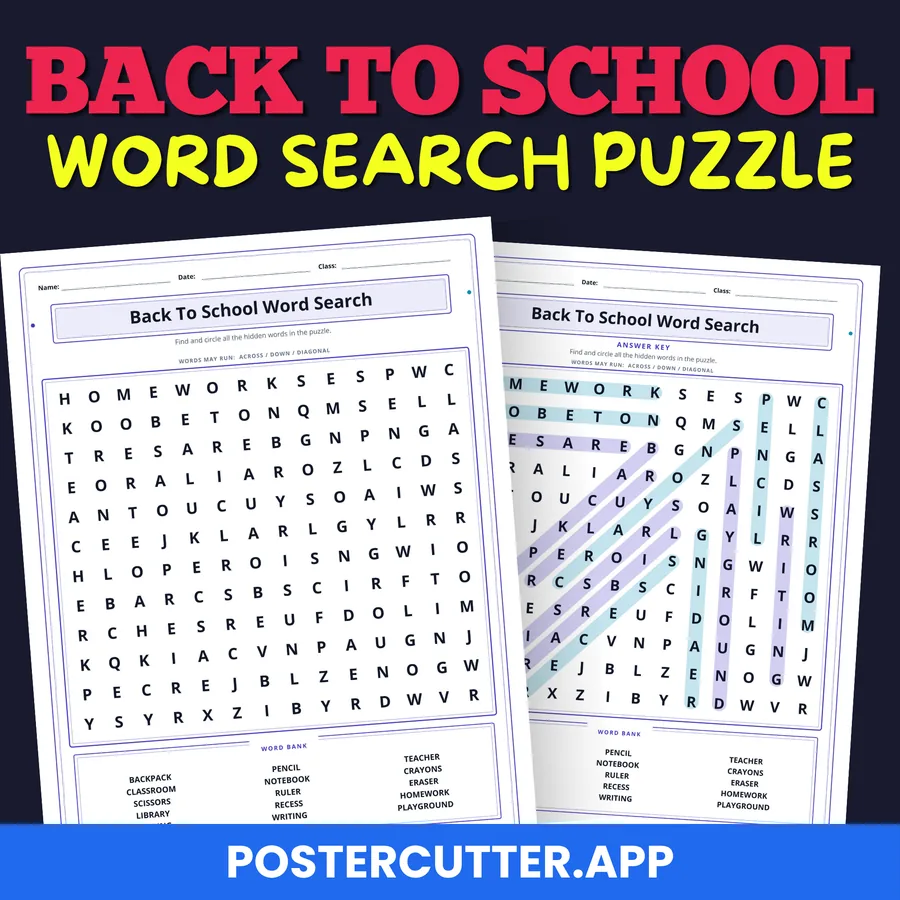
You can create a custom puzzle around your own classroom vocabulary with the PosterCutter Word Search Maker, which also produces a matching answer key.
The important part is to treat the word search as the beginning of the activity, not the complete lesson.
 PosterCutter resourceBack To School Word Search PuzzleView printable resource
7. Try a “What Is Missing?” Sequencing Game
Place four of the five handwashing steps on the board and deliberately leave one out.
Students must identify the missing step.
For example:
Wet.
Soap.
Rinse.
Dry.
What is missing?
Scrub.
For older students, make the mistakes more subtle. Put all the steps on the board but place two in the wrong order.
This is an easy five-minute review activity that can be repeated later in the week.
8. Build a Hygiene Routine Mini-Book
For K–2, a small foldable book can reinforce the sequence without feeling like another worksheet.
One page per step works well:
I wet my hands.
I use soap.
I scrub carefully.
I rinse.
I dry my hands.
I help keep our classroom healthy.
Students draw one picture on each page.
For grades 3–4, replace the sentence with a short explanation prompt:
“Why is this step important?”
This is similar to the practical sequencing and mini-book formats currently used in hygiene resources on Eduki and Tes Resources, where handwashing lessons often combine visual steps, sorting, and independent practice.
9. Do a Sink-Side Observation Check
If school procedures allow it, take a small group to the sink and ask students to observe the environment rather than immediately wash.
Ask:
Where is the soap?
How do we turn on the water?
How do we dry our hands?
Where should we stand while waiting?
How can several students use the area safely?
This turns a health lesson into a classroom-routine lesson.
Students often understand a rule better when they can connect it to the exact sink, queue, soap dispenser, and drying method they use every day.
10. Create Handwashing Scenario Cards
Scenario cards are particularly useful for grades 2–5 because they require students to apply the routine.
Try examples such as:
Leo washes his hands before lunch but scrubs for only three seconds. What should he change?
Amina coughs into her hand and then reaches for a shared pencil box. What would be a better next step?
Noah has just finished helping with the class pet. What should he do before eating his snack?
Ask students to answer in one complete sentence and explain why.
That turns hygiene vocabulary into decision-making practice.
11. Let Students Design the Reminder
Instead of giving students a finished handwashing poster, ask them to create one.
The design brief can be:
Create a poster that would help a younger student remember how to wash their hands correctly.
Give students four requirements:
one clear title;
the steps in the correct order;
large, readable text;
simple pictures that support the message.
This combines health education with visual communication and writing.
If a hand-drawn or scanned design needs to be enlarged for a classroom display, prepare the artwork carefully first. The PosterCutter Printable Image Upscaler can help improve suitable low-resolution printable artwork before it is placed into the final layout.
Always inspect the final result at full print size rather than assuming it is clear because it looks fine on a small screen.
12. Finish With a Handwashing Hero Exit Ticket
Keep the final check short.
Try four questions:
Name one important time to wash your hands.
How long should you scrub with soap?
Name one part of the hands people may forget to scrub.
What is one handwashing habit you can practice at school?
For younger students, use picture choices for the first three questions and a drawing box for the final response.
The exit ticket gives you a quick way to see whether students remember the routine rather than simply enjoying the activities.
A Simple 30-Minute Global Handwashing Day Lesson
If you only have one short lesson tomorrow, combine four of the ideas above.
TimeActivityPurpose5 minutesWhen Should We Wash? card sortActivate prior knowledge8 minutesHandwashing sequence cardsTeach the routine5 minutes20-second timing challengePractice correct duration8 minutesHandwashing Hero poster or scenario activityApply the learning4 minutesExit ticketCheck understanding
That is enough to make the day meaningful without abandoning the rest of your timetable.
For Teacher-Sellers: What Makes a Useful Handwashing Resource?
Global Handwashing Day also creates a timely October product opportunity for teacher-authors, but usefulness matters more than filling a bundle with decorative pages.
A practical resource could include:
picture sequencing cards;
when-to-wash sorting cards;
a mini-book;
scenario task cards;
a vocabulary word search with answer key;
a handwashing poster;
a 20-second classroom timing activity;
an exit ticket;
a black-and-white student version;
a larger collaborative display option.
Current hygiene resources on Teachers Pay Teachers, Eduki, and Tes Resources show that teachers use several formats for this topic: sequencing, posters, sorting, stories, visual routines, and complete hygiene lessons.
If you sell a handwashing resource, make the listing clear about:
grade or age range;
number of pages;
whether answer keys are included;
color and black-and-white versions;
US Letter or A4 compatibility;
whether the file is editable;
what preparation the teacher needs to do.
Avoid turning health guidance into exaggerated claims. Keep the resource focused on established handwashing routines and point teachers toward their own school or health-authority guidance when local procedures differ.
Make the Lesson Useful After October 15
The best Global Handwashing Day resource should still be useful on October 16.
Keep one visual poster near the sink.
Reuse the scenario cards after illness outbreaks or before food-related classroom activities.
Bring the sequencing cards back as a quick review after school holidays.
Add handwashing vocabulary to a health or science unit.
Use the mini-book with younger students who join the class later in the year.
The goal is not to make students think about handwashing for one special day. It is to make the routine easier to remember when they actually need it.
Final Thoughts
Global Handwashing Day is a small calendar event with unusually practical classroom value.
You do not need an elaborate experiment or a 30-page packet. Teach students when to wash, show the sequence clearly, practice the 20-second scrub, and give them one activity that asks them to apply what they learned.
If you are creating your own classroom version, start with your teaching objective first and use printable tools only where they save preparation time.
You can browse PosterCutter Explore for classroom-printable formats or use PosterCutter's poster, puzzle, and image-preparation tools to turn your finished educational content into classroom-ready materials.