PosterCutter Blog
20 Red Ribbon Week Activities for Elementary School (2026)
Make Red Ribbon Week meaningful with 20 classroom-friendly activities, including collaborative posters, writing prompts, door displays, kindness projects, vocabulary activities, and printable ideas.
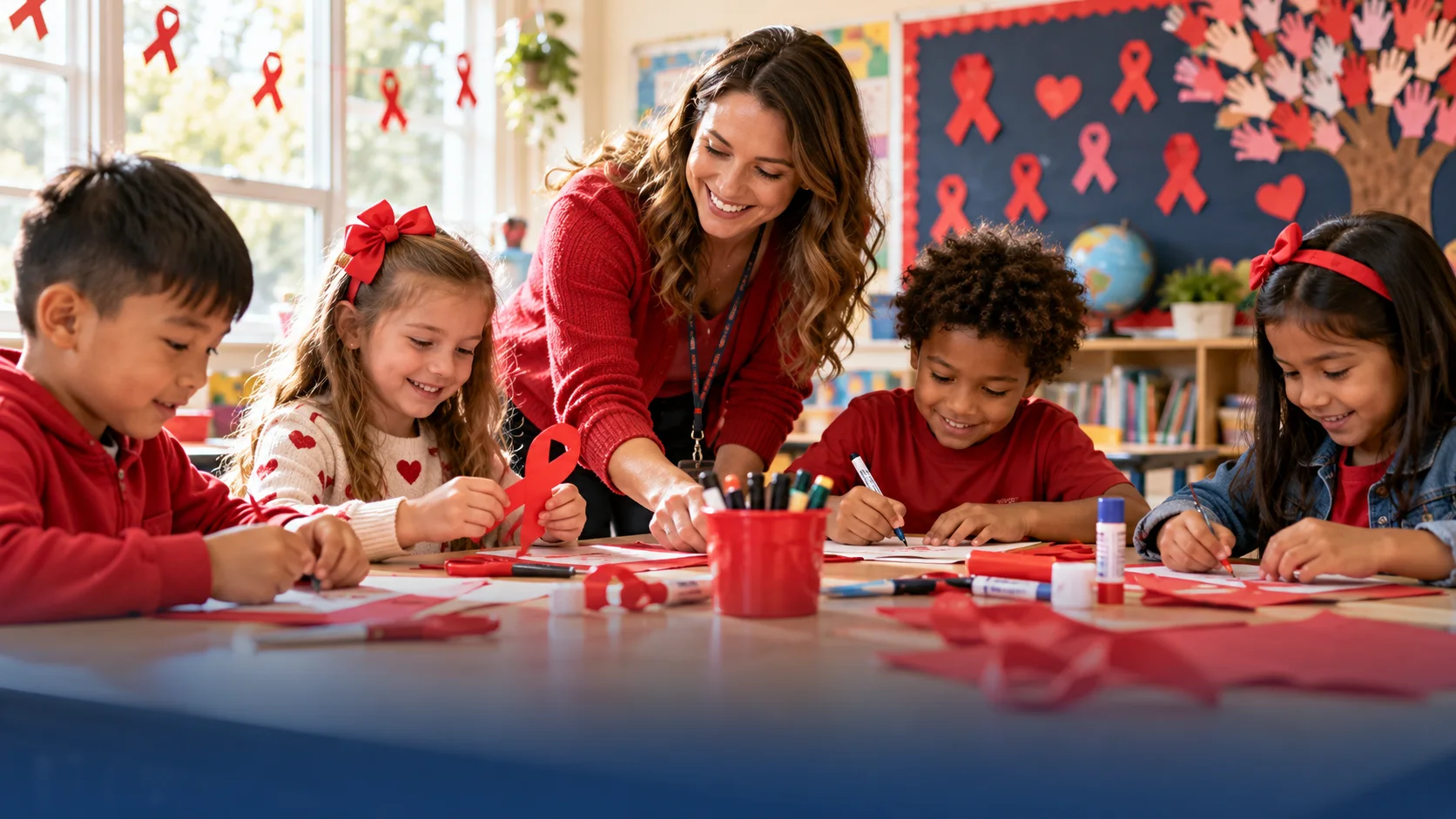
Red Ribbon Week gives teachers an opportunity to turn an important school-wide message into positive, age-appropriate classroom activities.
In 2026, Red Ribbon Week is observed from October 23 through October 31, with the official theme “Make A Difference. Be A Hero. Stay Drug Free.” The DEA provides schools and families with promotional ideas, graphics, fact sheets and other resources for the campaign.
But celebrating the week does not have to mean giving students another lecture.
Writing, art, classroom displays, teamwork and reflection activities can help elementary students explore healthy choices, positive influences and personal responsibility in ways that feel appropriate for their age.
Here are 20 ideas teachers can adapt for Red Ribbon Week 2026.
Create a collaborative “Be a Hero” classroom poster
Start with one large classroom design based around the 2026 theme.
Each student colors one section before the class combines every section into one large mural.
This makes the message itself collaborative: every student contributes one small part to something the whole class creates together.
A design can include a large red ribbon, stars, student-friendly superhero symbols, or a simple positive message such as:
Our Choices Make a Difference
or:
Be a Hero. Make Healthy Choices.
PosterCutter is particularly useful for this format because a teacher can upload one design and divide it into organized printable student pages before exporting the mural as a PDF.
Create a collaborative classroom poster with PosterCutter
Build a classroom pledge wall
Give every student a small red ribbon-shaped piece of paper.
Instead of asking children to repeat a generic slogan, let them finish a positive statement:
One healthy choice I can make is…
I can be a positive influence by…
One way I can help my classmates is…
Assemble the responses into a classroom display.
Write about what makes someone a hero
The 2026 theme creates a natural writing prompt.
Ask:
What makes someone a hero in everyday life?
Students might write about helping another person, making responsible decisions, standing up for a friend, being honest, or choosing not to follow negative peer pressure.
Younger students can draw and label their hero. Older elementary students can write a full paragraph.
Create “healthy choice” scenario cards
Give students simple scenarios:
A friend asks you to do something you know breaks a classroom rule.
Someone is being left out at recess.
You feel pressured to copy someone else's work.
Ask students:
What choice could you make?
Who could help you?
What might happen next?
The focus stays on decision-making skills rather than frightening students.
Make a Red Ribbon Week vocabulary activity
Choose vocabulary such as:
choice, healthy, responsibility, courage, support, respect, leader, community, influence, decision.
Turn the vocabulary into a word-search or matching activity, then ask students to use several words in sentences.
This is a natural place in the article to link directly to the PosterCutter Word Search Maker, because the tool supports the exact printable workflow your reader is already thinking about.
Create a classroom word search with PosterCutter
Design a classroom door
Turn the entire classroom door into part of the event.
Possible themes include:
Heroes Make Healthy Choices
Our Class Makes a Difference
Be Brave. Be Kind. Be You.
Students can each create one piece of the display.
Create superhero writing cards
Ask students to invent a “healthy-choice superhero.”
Their character needs:
a name, a special ability, three character traits, one challenge, and an example of how they help other people.
This turns the superhero element of the official theme into a creative writing exercise.
Make a positive-influence chain
Students write one positive action on strips of red paper.
Connect the strips into a paper chain around the classroom.
By the end of the week, the visual display represents all the ways students believe they can positively influence their community.
Create a class kindness challenge
Red Ribbon Week can also connect with classroom culture.
Challenge students to complete small actions such as helping someone, including another student, thanking a staff member, cleaning a shared space or giving a sincere compliment.
Write letters to future selves
Ask students to complete:
When I face a difficult decision, I want to remember…
Seal the letters and return them later in the school year.
Create an “I Can Ask for Help” poster
Students should know that responsible decisions do not always have to be made alone.
Build a classroom poster around trusted adults and support systems:
At school, I can talk to…
At home, I can talk to…
When I am unsure, I can…
Keep the lesson simple, reassuring and age appropriate.
Use red-ribbon coloring pages as early finisher work
A coloring page can include one short message and a writing line:
One good choice I made this week was…
That adds reflection to what would otherwise be only a coloring activity.
Create a “choices have consequences” sorting activity
Use everyday, non-drug scenarios appropriate for elementary students.
Students sort choices into categories such as:
helpful
unsafe
responsible
kind
Then discuss why different people may need support when making decisions.
Make a Red Ribbon Week bookmark
Students design bookmarks with one positive message.
Laminate them if possible and let students keep them after the week ends.
Build a class acrostic
Write:
H E R O
Students suggest positive words or phrases for every letter.
For example:
H — Help others
E — Encourage friends
R — Respect yourself
O — Own your choices
Create a healthy-habits mini-book
Younger students can make a short book about habits such as sleep, movement, asking for help, friendship and healthy choices.
Run a classroom poster contest
Let individuals or small groups design Red Ribbon Week posters.
Instead of selecting only a “best artist,” create categories such as:
Clearest Message
Most Creative Idea
Best Teamwork
Most Positive Message
A winning design can then become a larger classroom or hallway poster. PosterCutter can divide a single design into regular printable pages so it can be assembled at a larger size without manually cropping every tile.
Create a bulletin-board display
Combine writing, coloring and student pledges instead of using a pre-made decoration only.
A simple heading such as “Our Choices Make a Difference” allows the board to display real student work.
Explore teacher-created resources
Teachers who want additional worksheets, writing activities or classroom materials can also browse teacher-resource marketplaces such as Teachers Pay Teachers, Eduki and Tes Resources.
For resources designed to work directly with PosterCutter's printable workflow, teachers can browse PosterCutter Explore, where resources can be opened and prepared for tiled classroom printing.
Finish with a class reflection
At the end of the week, ask:
What did we learn about making good decisions?
How can our choices affect other people?
What makes someone a positive influence?
Who can we talk to when we need help?
That reflection gives the week's activities a clear ending rather than allowing the posters to become decorations that students stop noticing.
Make the message visible
Red Ribbon Week works best when students do more than see a slogan on a wall.
Let them write, draw, discuss, create and contribute.
One student can complete a small coloring tile. Another can write about a person they admire. Another can create a positive-choice message.
When those pieces become a large classroom display, the final result represents the class rather than simply decorating it.
Teachers already working with a Red Ribbon Week illustration can use PosterCutter's Collaborative Poster Maker to turn one design into organized student pages and a printable classroom mural.