PosterCutter Blog
10 Growth Mindset Activities & Printables for Elementary Students
Help students build confidence, persistence, and better learning habits with these 10 practical growth mindset activities, printable worksheets, classroom posters, and reflection ideas.

Students often think being “good” at a subject means getting the answer right immediately.
But real learning usually looks different.
It involves trying, making mistakes, asking questions, practicing again, and improving over time.
That is where growth mindset activities can help.
A growth mindset does not mean telling students that everything is easy or that effort always guarantees success. It means helping them understand that skills can improve through practice, useful strategies, feedback, and persistence.
Here are 10 practical activities you can use in an elementary classroom.
1. “Mistakes Help Us Grow” Collaborative Poster
Start with a simple class message:
Mistakes Help Us Grow
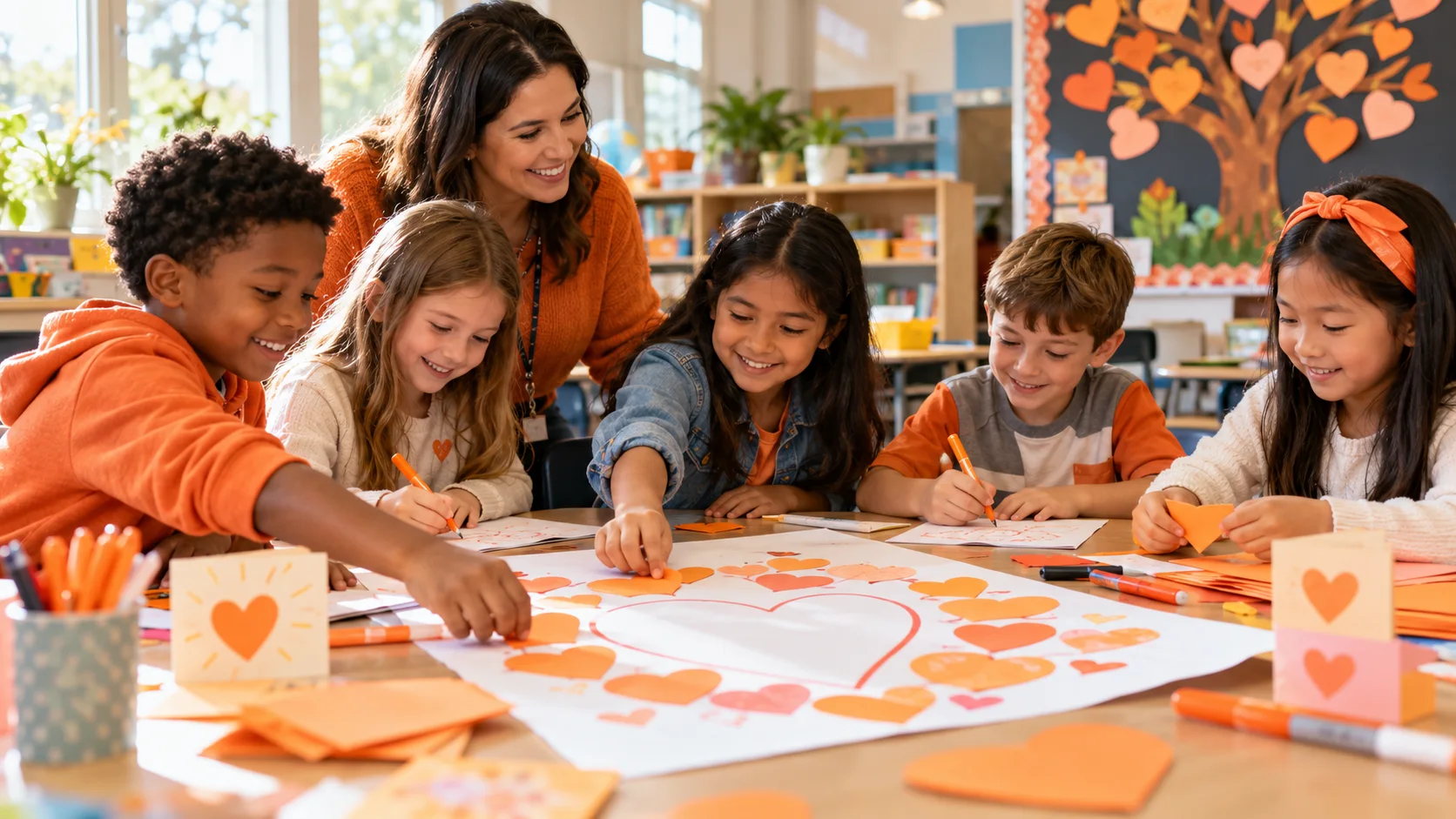
Turn the phrase into a large collaborative classroom poster.
Each student receives one part of the image to color. When all the pages are finished, assemble them into one large display.
This works well because the activity itself reinforces the message.
Every student contributes one small piece, and the class sees how those pieces come together to create something bigger.
PosterCutter can turn a PNG, JPG, or PDF design into printable poster tiles, which makes this kind of classroom activity much easier to prepare.
Create a collaborative classroom poster with PosterCutter
You can use a simple image such as:
a growing plant;
a smiling brain;
a mountain climb;
a watering can;
a classroom garden;
a staircase showing progress.
2. My Learning Goal Worksheet
Give each student a simple goal-setting page with prompts like:
My goal is:
I can do this by:
I will know I am successful when:
This helps turn vague goals into something more concrete.
Instead of writing:
I want to get better at math.
A student might write:
I want to learn my multiplication facts.
I can practice five facts every day.
I will know I improved when I can answer them without help.
That is much easier to understand and track.
You can revisit the same goal every week.
3. Growth Mindset Word Search
A word search can be more useful when the vocabulary supports the lesson.
Try words such as:
effort;
practice;
growth;
mistakes;
improve;
challenge;
persist;
learn;
believe;
success.
After students find the words, ask them to choose three and explain what each one means.
You can also ask them to write one sentence using each word.
PosterCutter's Word Search Maker lets you create custom vocabulary puzzles and answer keys from your own word list.
That makes it easy to match the worksheet to the exact terms you are using in class.
4. “Challenge Accepted” Reflection Page
Give students a writing prompt like:
Write about a time something was difficult. What did you do to keep going? What did you learn?
This works especially well after:
a hard math lesson;
a writing assignment;
a science project;
a test;
a group activity.
The goal is not to force students to say the experience was fun.
Instead, help them notice what they did when the work became difficult.
Did they:
ask for help?
try a different strategy?
practice again?
slow down?
reread directions?
use an example?
That reflection is often more useful than simply telling students to “work harder.”
5. Replace Fixed-Mindset Statements
Write common statements on the board.
For example:
I can't do this.
I'm bad at math.
I always make mistakes.
Everyone else is better than me.
Ask students to rewrite them in a more useful way.
Examples:
I can't do this yet.
This part of math is difficult for me, so I need more practice.
Mistakes show me what I need to work on.
I can focus on my own progress.
This is a simple but powerful classroom discussion.
6. Create Growth Mindset Affirmation Cards
Affirmations work best when they are realistic.
Instead of:
I am perfect at everything.
Use statements like:
I can learn new things.
I can keep trying.
I am proud of my effort.
Challenges help me grow.
Mistakes help me learn.
I can ask for help.
Print the statements as small cards.
Students can keep one on their desk, glue one into a notebook, or choose one at the beginning of the week.
These cards can also work well as part of a classroom bulletin board.
7. The Power of “Yet”
Choose a skill students are still learning.
Ask them to complete:
I can't ______ yet.
Then:
One thing I can do to improve is ______.
Examples:
I can't divide two-digit numbers yet.
I can practice one example every day.
or:
I can't read this book independently yet.
I can practice with a partner.
That one word — yet — makes the statement feel temporary instead of permanent.
8. Growth Mindset Coloring Page
Coloring pages can work well as a quiet reflection or early-finisher activity.
Use designs with messages like:
Keep Going
Mistakes Help Us Grow
Progress Takes Practice
I Can Learn Hard Things
Students can color the page and write one sentence about what the message means to them.
If the artwork is intended for larger printing, PosterCutter also has a Printable Image Upscaler that can help prepare educational graphics for print.
9. Celebrate Strategy, Not Just Correct Answers
When students solve a difficult problem, ask:
What strategy helped you?
Possible answers:
I drew a picture.
I used a number line.
I reread the question.
I asked a partner.
I checked my work.
I tried another method.
You can create a classroom wall called:
Strategies That Help Us Learn
Add student examples throughout the year.
This keeps the focus on learning behaviors instead of only grades.
10. Build a Growth Mindset Mini-Pack
A small printable pack can be useful for classroom routines.
For example:
Growth Mindset Mini-Pack
word search;
learning goal worksheet;
reflection page;
affirmations cards;
coloring page;
collaborative poster.
That gives teachers several ways to use the same theme.
One activity might be used during morning work.
Another can become a bulletin board.
Another can be used for writing or reflection.
If you create educational resources for other teachers, a pack like this can also work well on marketplaces such as Teachers Pay Teachers, Eduki, or Tes Resources.
You can also browse classroom printables and educational resources in PosterCutter Explore.
Growth Mindset Is About Better Learning Habits
Growth mindset activities are most useful when they connect to real classroom experiences.
Students do not need to hear:
Never give up.
Sometimes they need to:
change strategies;
ask for help;
take a short break;
try again later;
practice a smaller step first.
The goal is to help students understand that learning is a process.
Progress can be slow.
Mistakes are normal.
Practice matters.
And improvement is something students can notice over time.
A few simple printables, reflection pages, classroom discussions, and visual reminders can make those ideas part of everyday classroom routines.